ResourceType
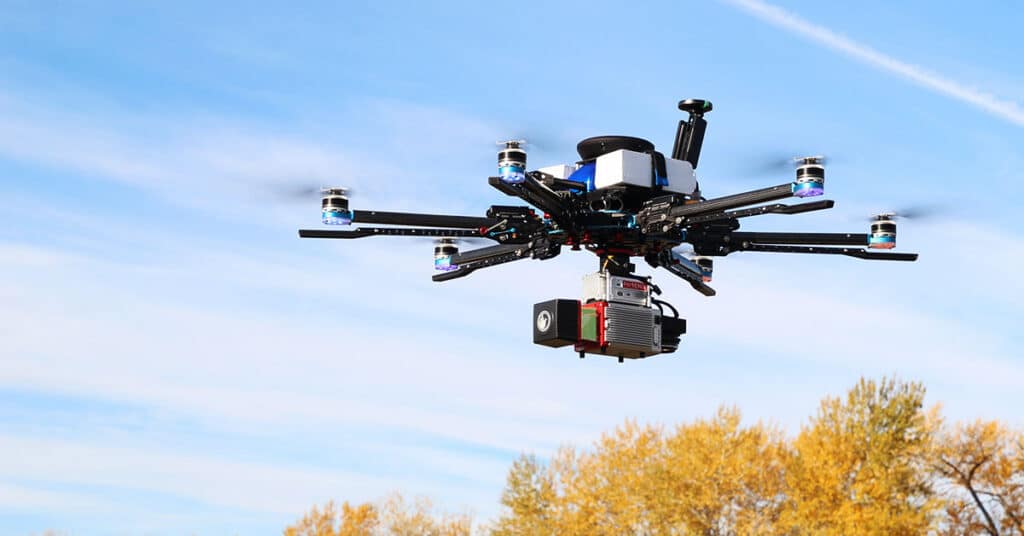
Featured Article: “Inventing the Workflow: How Phoenix LiDAR Helped Build the Market It Now Serves” from xyHt.
Commercial UAV LiDAR has evolved from a niche technology into an essential tool for surveying, engineering, utilities, transportation, and infrastructure mapping. That transformation was driven not only by advances in sensors, but also by the development of complete workflows that made the technology practical and repeatable in the field.
In this feature published by xyHt, the publication explores Phoenix LiDAR’s role in helping establish the commercial UAV LiDAR market through innovations in hardware integration, software development, customer training, and workflow automation. The article looks back at the industry’s early challenges and examines how complete mapping solutions helped accelerate adoption across the geospatial community.
The feature also examines the evolution of Phoenix LiDAR Systems, from its founding by Grayson Omans and Ben Adler to its acquisition by Revolution Geosystems. By combining Phoenix’s turnkey LiDAR hardware and software expertise with Revolution’s aviation and equipment rental services, the partnership strengthens its ability to provide comprehensive geospatial solutions spanning data acquisition, processing, and project support.
Read the full feature on the xyHt website to learn more about the evolution of commercial UAV LiDAR and Phoenix LiDAR’s contribution to the industry.
Related Resources:
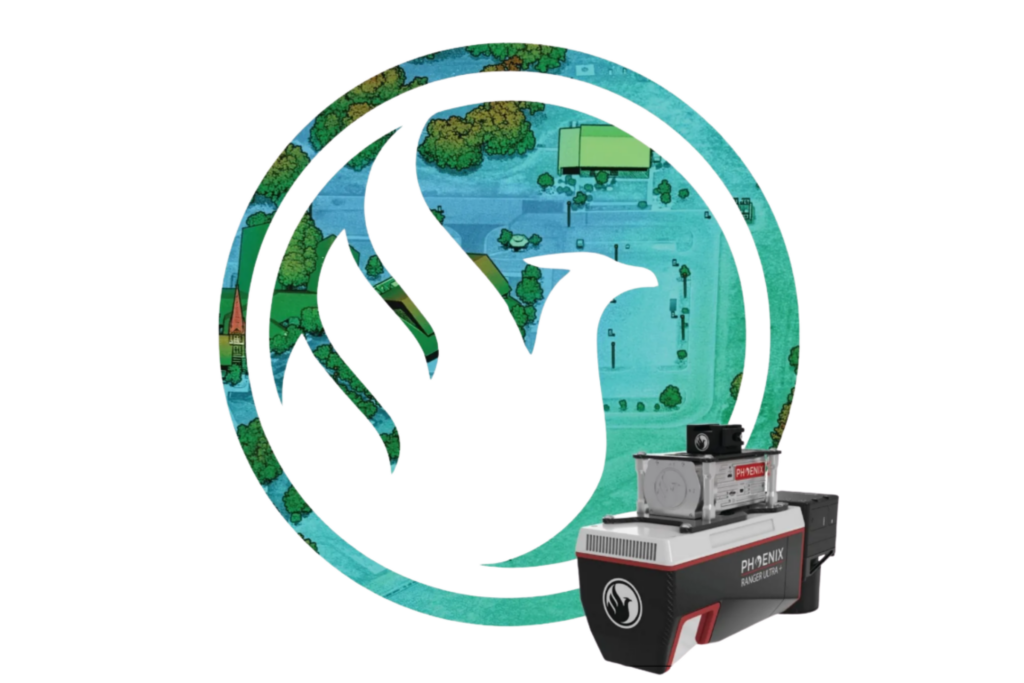
Featured Article: “Designing LiDAR Around the Workflow” from xyHt
Survey-grade mapping depends on far more than advanced sensors. It requires a complete workflow that connects mission planning, data acquisition, calibration, processing, quality control, and final deliverables into a consistent, repeatable process.
In this feature published by xyHt, Phoenix LiDAR President Rob Dannenberg discusses why the company has built its hardware, software, and deployment model around the workflow rather than individual platforms.
The article explores how modular hardware, integrated software, automation, and platform-agnostic design help surveying and infrastructure professionals achieve consistent results regardless of vehicle collection method. By creating a strong, singular workflow, Phoenix LiDAR users can use the same workflow regardless of the acquisition platform. For example, the RANGER-Flex system is designed to be used across vehicles: UAV, mobile, backpack, and even manned aircraft.
Read the full feature on the xyHt website to learn more about the history of UAV LiDAR and how workflow innovation continues to drive the industry forward.
Related Resources:

Featured Article: “The Chain That Counts” from xyHt
Producing survey-grade drone data requires more than advanced sensors; it depends on an integrated workflow that ensures accuracy from collection through final deliverables.
At XPONENTIAL 2026 in Detroit, industry leaders from across the geospatial ecosystem gathered to discuss one of the biggest challenges facing drone mapping today: transforming raw sensor data into survey-grade deliverables that professionals can trust. The panel explored every stage of the workflow from positioning and sensor fusion to quality assurance, GIS integration, and final project delivery.
Phoenix LiDAR President Rob Dannenberg joined representatives from Trimble Applanix, GEODNET, and Esri to share practical insights into the technologies, processes, and industry standards that help ensure reliable mapping results. The discussion also addressed evolving topics including GNSS corrections, SLAM, ground control, quality control, workforce development, and what “survey grade data” really means in today’s geospatial industry.
This article, published by xyHt, provides an excellent overview of the complete drone mapping workflow and the considerations that separate successful data collection from dependable project deliverables.
Read the full article “The Chain That Counts” on the xyHt website.
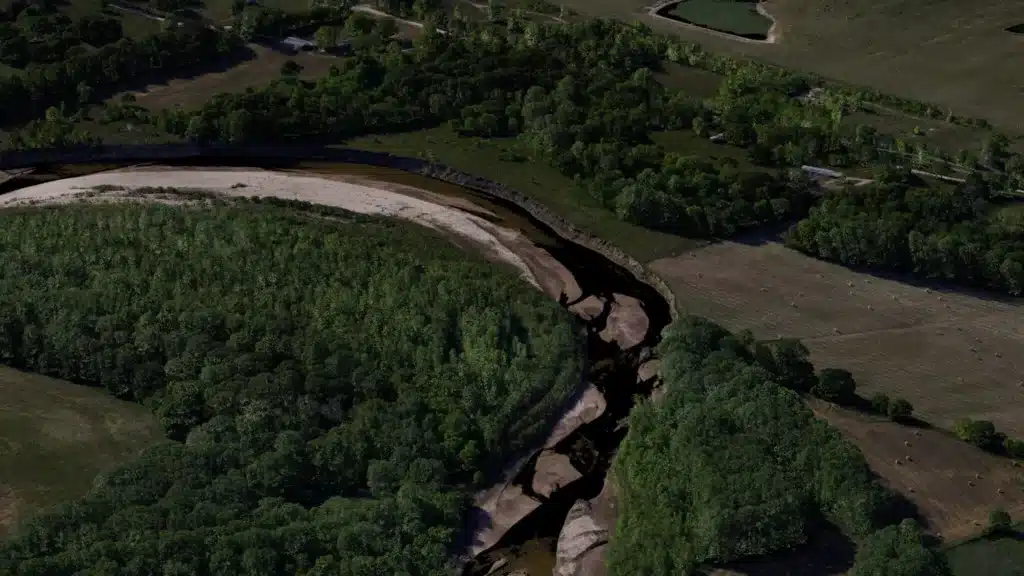
In this LiDAR News original article, “Airborne LiDAR Lays Foundation for Oklahoma Energy Project,” covers a large-scale LiDAR mapping project to prepare for an energy development project.
Airborne LiDAR continues to play an important role in supporting large-scale energy and infrastructure development by delivering accurate, high-resolution terrain data quickly and efficiently. This case study examines how the Blew & Associates team used the RANGER-U240 to support an energy project in Oklahoma and the benefits it provided throughout the surveying and planning process.
Download the PDF below, or read the original article on LiDAR News to read the whole piece.
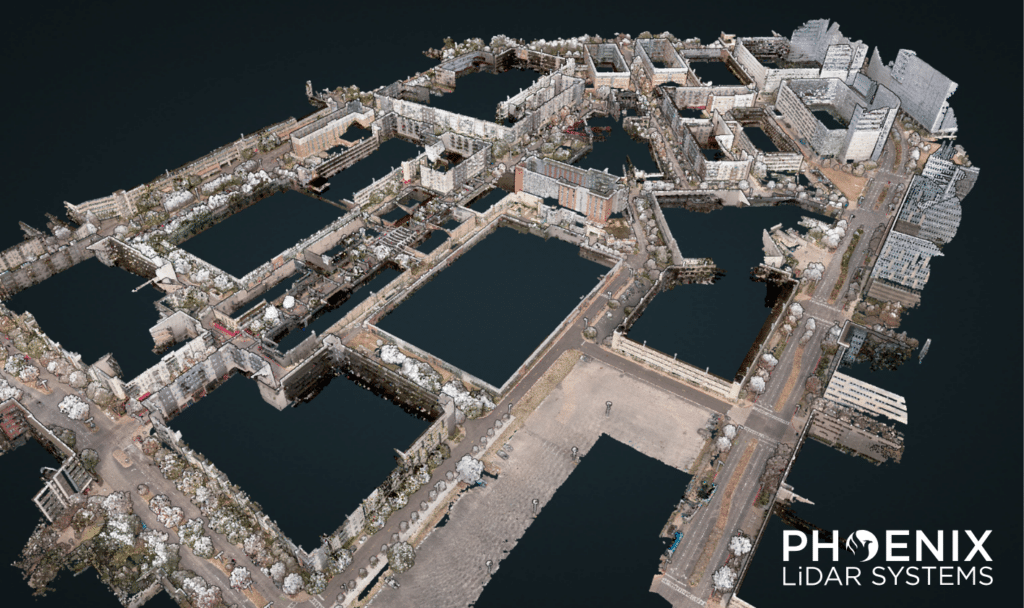
Colorized RANGER-FLEX RFM2 dual head data set, utilizing the Mosaic X panoramic camera for colorization.
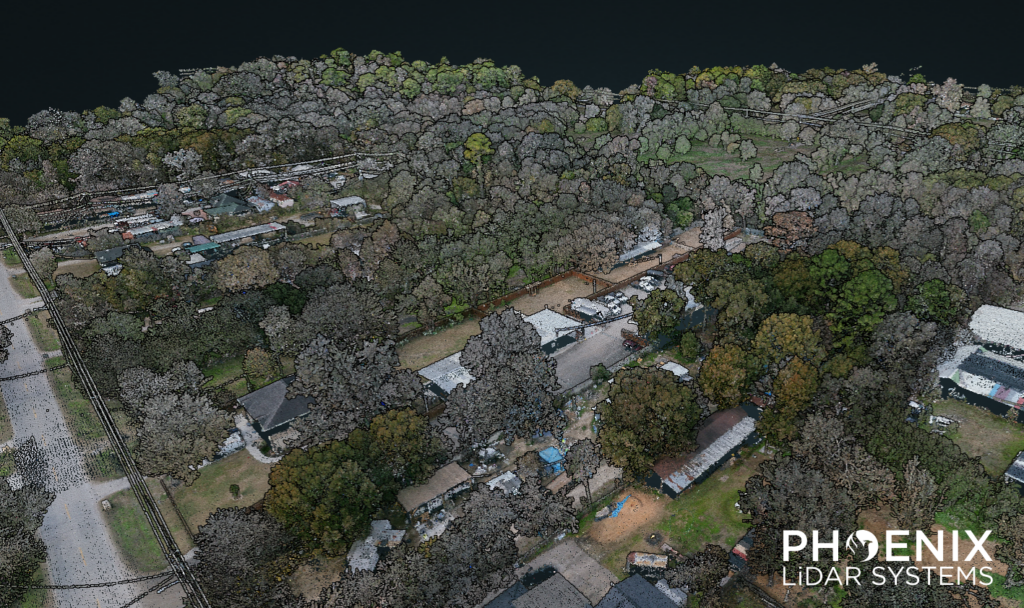
This RECON-F4 demo was collected during 2 flights at 80 m AGL (although this scanner is capable of producing great data even higher), 10 m/s with the RECON-F4, and processed in SpatialExplorer. Relative accuracy between flightlines came in at 0.064 US-ft, and the data hit surveyed check points at 0.07 US-ft without needing adjustment to control. The point cloud was colorized using imagery from the integrated full-frame camera.
LiDAR remote sensing systems utilizing GNSS/INS are reliant on the integration of an accurate Inertial Measurement Unit (IMU) to achieve high-quality data. The IMU forms the core of the navigation system, which is used to estimate a trajectory. This
trajectory is then used for georeferencing (“fusing”) raw LiDAR range data into a point cloud. IMUs vary in terms of performance and price, so selecting the right IMU for a given LiDAR application is an important step.
IMU hardware collects data from gyroscopes and accelerometers. Gyroscopes, which are used to measure rates of rotation along 3 axes (roll, pitch, and yaw), have inherent measurement imperfections. When a gyroscope is stationary and not rotating, output
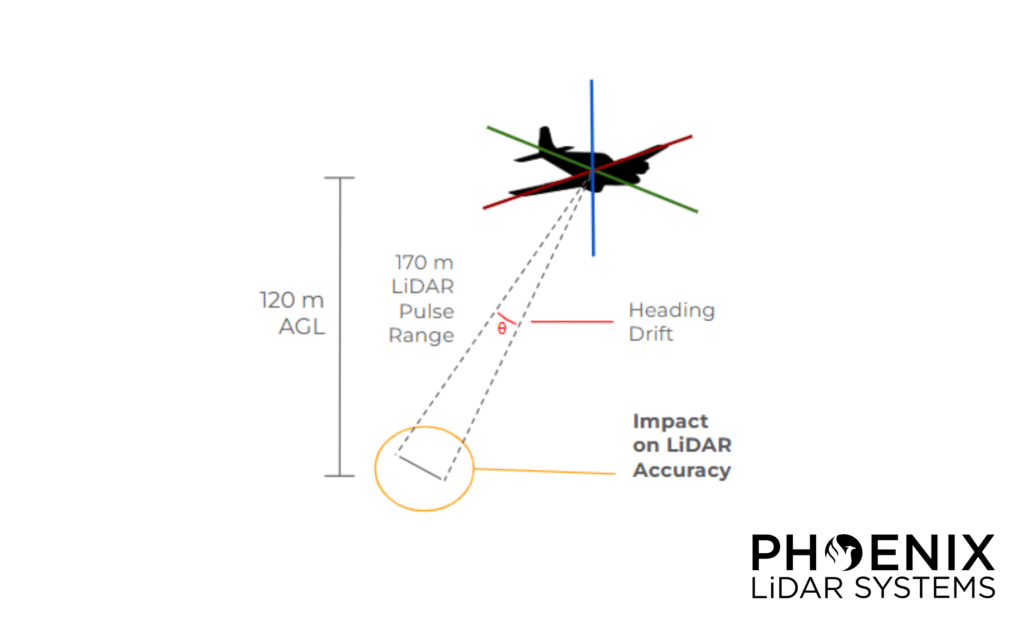
measurements, which should be constant due to the lack of rotation, will in fact change, or drift, over time. It’s important to consider that an IMU may drift along certain axes, even when not completely stationary. For example, traveling with a constant heading means that the gyroscope associated with measuring heading is nearly at rest and subject to drift. Drift along the heading axis is typically more impactful than the drift observed along the pitch and roll axes, as “A good portion of the pitch (attitude) and roll axis gyroscope drift can be removed within an IMU through the use of accelerometer feedback to monitor position relative to gravity” (Analog Devices, 2017).
Heading drift is most pronounced when a vehicle travels in a relatively straight path for a prolonged period of time, as heading estimates degrade in accuracy due to an accumulation of gyroscope noise. This is particularly problematic with aerial LiDAR
data acquisition, as single-grid type and corridor acquisitions must take into account how long the IMU can travel in a straight path without accumulating too much drift. To mitigate this, operators will typically limit their flight line lengths accordingly or
perform dynamic maneuvers in the middle of long flight lines.
Download the whitepaper to learn more.
View our other whitepapers in our resource library.
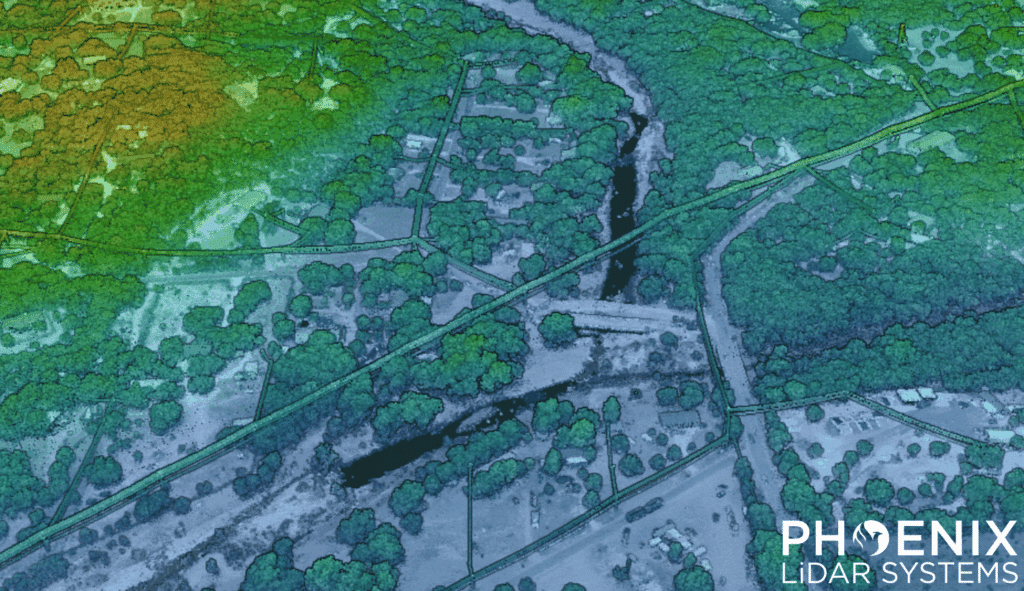
The RANGER-U240 was flown over Big Sandy Creek in Texas for post flood mapping at 250 m AGL, 65 knots. The result was 130 points/square meter, per line.
In July 2025, the Texas Hill Country experienced a devastating and deadly flooding event. As an Austin-based company, the Phoenix LiDAR team felt a strong responsibility to contribute in any way we could. First by volunteering in recovery efforts, and then by deploying our LiDAR technology to capture the effects in the aftermath.
To better understand the impact, our team conducted a manned mission with a Robinson R44 helicopter, deploying the 𝗥𝗔𝗡𝗚𝗘𝗥-𝗨𝟮𝟰𝟬 LiDAR system with a PhaseOne iXM-GS120 camera to capture high-resolution post-flood data.
Floods reshape entire communities, and understanding their impact is critical for recovery. Our team captured and processed post-flood LiDAR, creating a dataset that may be of interest to researchers, planners, and engineers working on:
- Flood modeling
- Understanding flood risks
- Infrastructure resilience
- Planning
We’re making this dataset publicly available in hopes it can support anyone who can use it for research, inform cleanup, planning, or long-term flood mitigation.
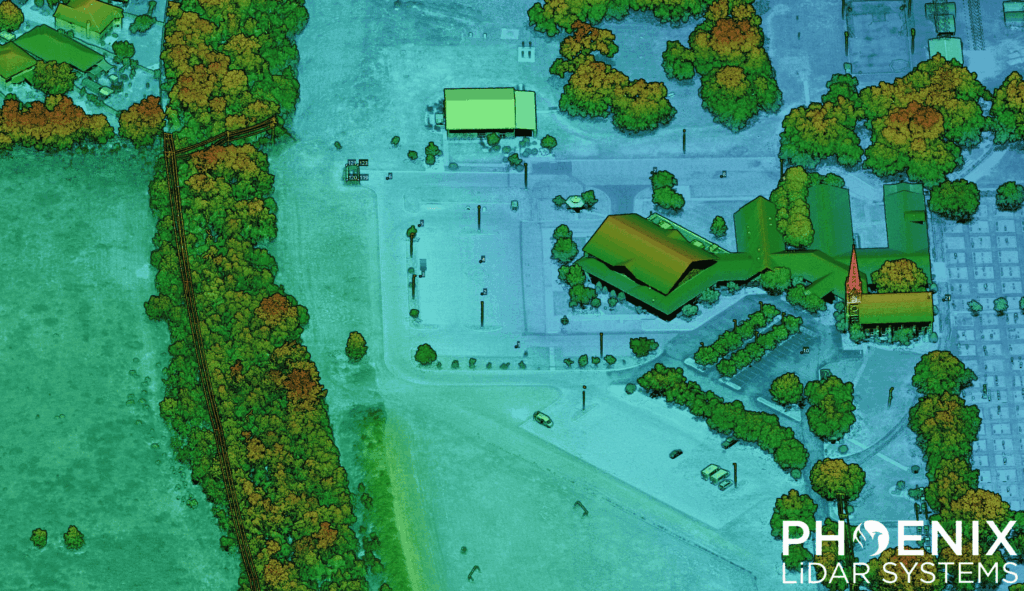
The RECON-F4 was flown at 120 m for a mapping flight at Phoenix LiDAR’s calibration site, flown at 6 m/s.